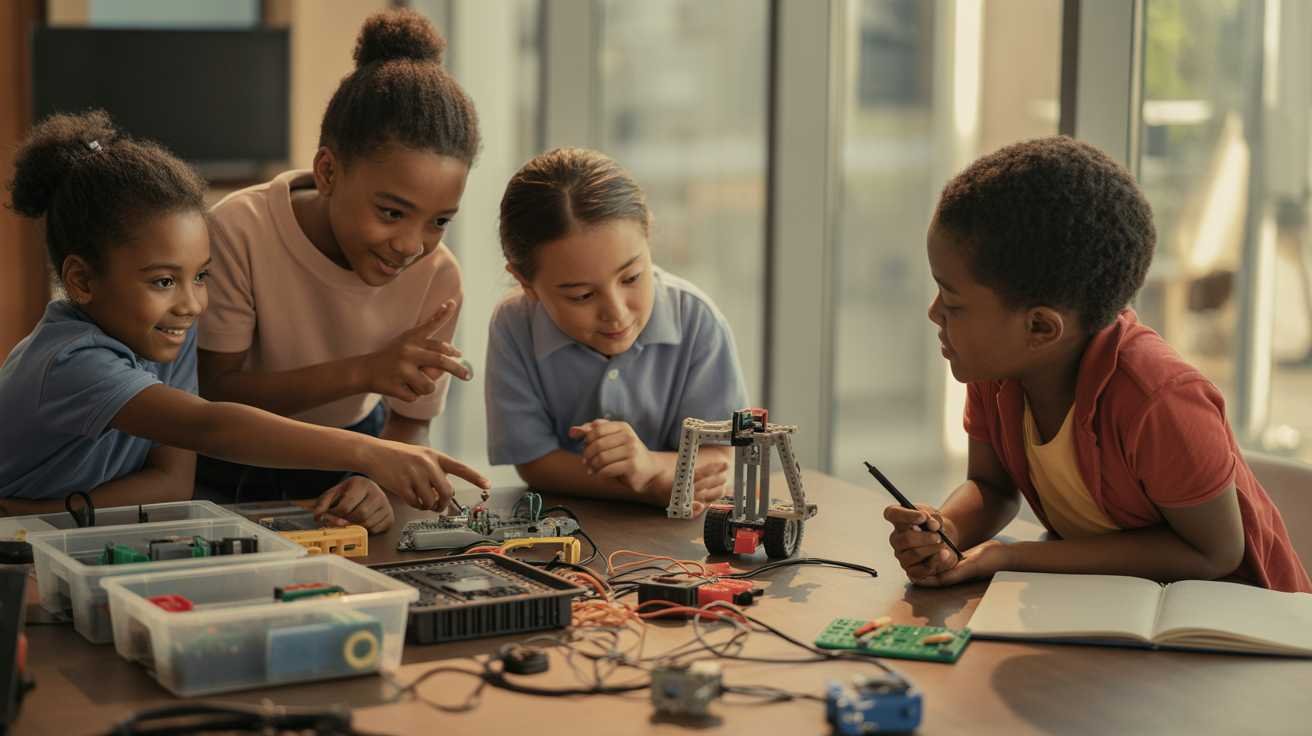
In today’s fast-paced, interconnected world, the ability to collaborate effectively, lead with confidence, and solve complex problems is more crucial than ever. Whether you’re an educator aiming to enrich your classroom, a parent seeking to inspire your child, or a team leader striving to enhance group dynamics, the solution lies in hands-on STEM kits. These immersive, tactile learning experiences not only ignite curiosity but also cultivate essential skills like teamwork, leadership, and communication. However, time is of the essence – opportunities to engage with these transformative tools are fleeting. Don’t let your chance slip away.
What Are Hands-On STEM Kits?
Hands-on STEM kits are comprehensive educational packages designed to immerse learners in Science, Technology, Engineering, and Mathematics through interactive, practical activities. These kits typically include all necessary materials and instructions to complete a series of experiments or projects that challenge students to think critically and work collaboratively. Unlike traditional textbook learning, these kits encourage active participation, problem-solving, and innovation. They are particularly effective in fostering a deep understanding of STEM concepts by allowing learners to apply theoretical knowledge in real-world scenarios.
For instance, the MTa STEM Kit offers 24 engaging activities that range from building stable structures to understanding core math skills like angles and geometry. Designed for ages 10 to 18, it prepares young people for careers in science and engineering by helping them connect theoretical knowledge with practical skills. Such kits are invaluable tools for educators and parents alike, providing structured yet flexible learning experiences that can be tailored to individual or group needs.
The Power of Collaboration in STEM Learning
Collaboration is at the heart of effective STEM education. Many of the challenges faced in the STEM fields require diverse perspectives and collective problem-solving. Hands-on STEM kits naturally promote teamwork by involving learners in group activities that necessitate communication, coordination, and shared decision-making. These collaborative experiences mirror real-world scenarios, preparing students for future careers where teamwork is often essential.
Moreover, engaging in group projects allows students to develop interpersonal skills such as empathy, conflict resolution, and leadership. As they work together to overcome obstacles and achieve common goals, they learn to value each other’s strengths and contributions. This collaborative spirit not only enhances their learning experience but also builds a sense of community and belonging within the group.
Building Leadership Skills Through Hands-On Activities
Leadership is not solely about taking charge; it’s about inspiring and guiding others toward a shared objective. Hands-on STEM kits provide numerous opportunities for students to step into leadership roles, whether by directing a group project, delegating tasks, or facilitating discussions. These experiences help students develop confidence in their abilities and learn how to motivate and support their peers.
For example, in a group activity where students are tasked with designing and building a bridge, one student might take the lead in planning the structure, another in gathering materials, and others in assembling the components. Through this process, each student practices different aspects of leadership, from strategic thinking to team coordination. Such activities not only enhance leadership skills but also foster a sense of responsibility and accountability among participants.
Enhancing Communication Skills Through Interactive Learning
Effective communication is a cornerstone of both teamwork and leadership. Hands-on STEM kits require students to articulate their ideas, listen to others, and negotiate solutions. Whether discussing the design of a model rocket or troubleshooting a malfunctioning circuit, students learn to express their thoughts clearly and consider alternative viewpoints.
These interactive learning experiences also encourage active listening and constructive feedback. As students collaborate, they practice giving and receiving input in a manner that is respectful and conducive to problem-solving. Over time, these communication skills become ingrained, benefiting students not only in academic settings but also in their personal and professional lives.
Real-World Applications and Career Readiness
One of the most compelling reasons to incorporate hands-on STEM kits into education is their ability to bridge the gap between classroom learning and real-world application. By engaging in projects that mimic actual challenges faced in STEM fields, students gain practical experience that enhances their understanding and prepares them for future careers.
For instance, students working with a robotics kit might design a robot to perform specific tasks, such as navigating a maze or sorting objects. This process involves problem-solving, coding, and mechanical design – skills that are highly valued in the technology and engineering sectors. Similarly, activities that involve environmental science, such as building a water filtration system, teach students about sustainability and resource management, areas of growing importance in various industries.
Fostering Critical Thinking and Problem-Solving Abilities
Hands-on STEM kits challenge students to think critically and solve problems creatively. Unlike traditional learning methods that often emphasize rote memorization, these kits encourage students to explore, experiment, and iterate. When faced with a problem, students must analyze the situation, hypothesize solutions, test their ideas, and refine their approaches based on outcomes.
This process not only deepens their understanding of STEM concepts but also cultivates a mindset that embraces challenges as opportunities for growth. Students learn that failure is not an endpoint but a stepping stone toward success, fostering resilience and perseverance – qualities that are invaluable in both academic and real-world contexts.
Integrating Mural Education Plans for Enhanced Collaboration
To further enhance the collaborative experience, educators can integrate digital tools like Mural into their STEM education plans. Mural is a visual collaboration platform that allows teams to ideate, align, and execute strategies in an interactive, digital workspace. By incorporating Mural into STEM activities, students can collaborate in real-time, regardless of their physical location, making it an invaluable tool for remote or hybrid learning environments.
Using Mural, students can create digital boards to brainstorm ideas, organize information, and track progress on projects. This integration not only supports collaboration but also introduces students to digital tools that are widely used in professional settings, preparing them for the demands of the modern workforce.
Choosing the Right STEM Kit for Your Needs
With a plethora of hands-on STEM kits available, selecting the right one can be daunting. It’s essential to consider factors such as the age group, learning objectives, and the specific skills you wish to develop. For younger students, kits that focus on foundational concepts and simple projects may be appropriate, while older students might benefit from more complex challenges that require advanced problem-solving and critical thinking.
Additionally, consider the level of support provided by the kit. Some kits come with comprehensive guides and instructional materials, while others may require additional resources or facilitation. It’s also beneficial to choose kits that align with educational standards or curricula, ensuring that the activities complement and reinforce classroom learning.
Don’t Miss Out – Act Now!
The opportunity to engage with hands-on STEM kits is fleeting, and the benefits they offer are immeasurable. By investing in these kits, you’re not just providing students with educational tools; you’re equipping them with the skills and experiences that will shape their futures. Don’t let this chance slip away – act now to incorporate hands-on STEM kits into your educational plans and watch as students develop into confident, capable, and collaborative individuals ready to tackle the challenges of tomorrow.